Jonas Schmid · 4 November 2026
School Districts Pilot Breezeway Features to Reduce Heat Exposure on Campuses
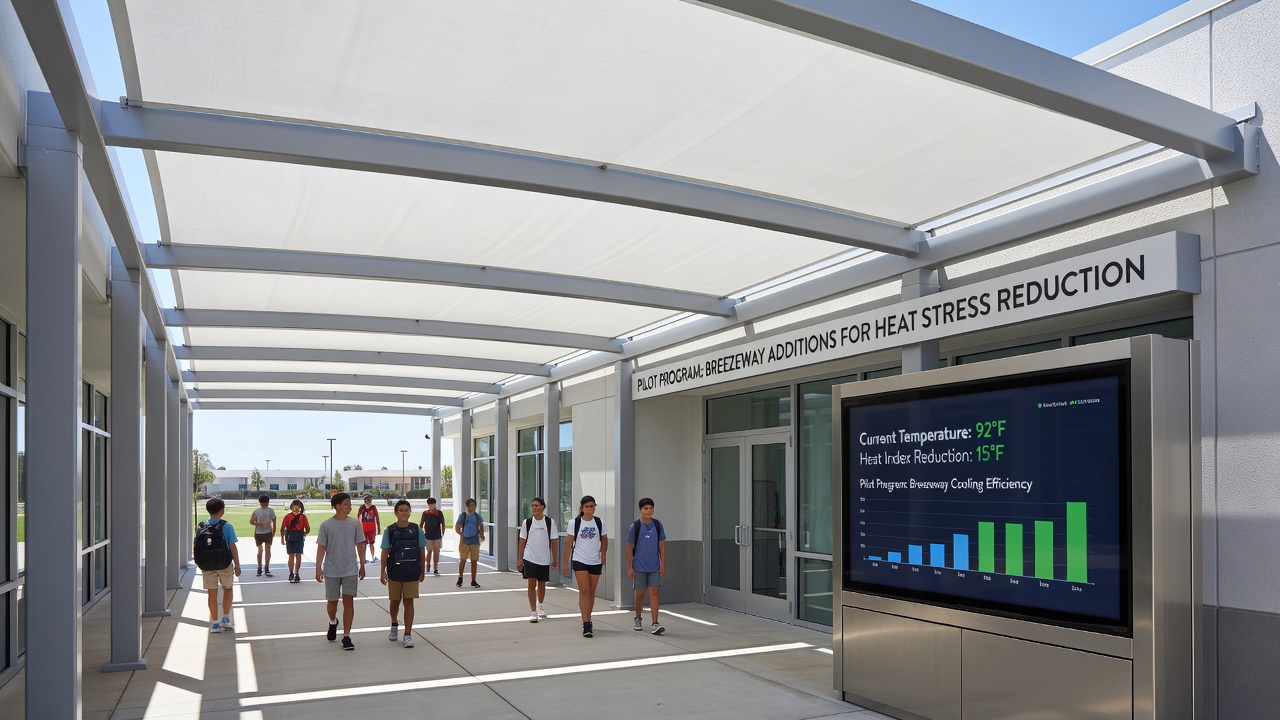
School districts across multiple regions have launched pilot programs that add breezeways to campuses, and these initiatives track how the structures affect heat stress levels among students and staff. Data collection began in early 2025 in several districts, with expanded monitoring scheduled through November 2026 to capture seasonal variations in temperature and usage patterns. Researchers note that breezeways create shaded pathways between buildings, which can lower surface temperatures and improve airflow in outdoor spaces where students move between classes.
Program Design and Implementation
Districts in the southwestern United States and parts of Australia have installed modular breezeway systems that connect main academic buildings with cafeterias, libraries, and athletic facilities. These additions use lightweight aluminum frames and perforated metal roofs that allow air circulation while blocking direct sunlight. Observers report that installation crews completed most sites during summer breaks to minimize disruption to classes, and the designs incorporate sensors that measure air temperature, humidity, and wind speed at multiple points along each walkway.
One study conducted by university teams in California and Queensland gathered baseline data before construction and continued measurements after the breezeways opened. The programs compare heat index readings in areas with and without the new structures, and they also record student-reported comfort levels through periodic surveys. Figures from the initial phase show average temperature reductions of 3 to 5 degrees Celsius in shaded corridors during peak afternoon hours, according to preliminary reports shared at regional education conferences.
Data Collection Methods
Monitoring equipment includes wireless nodes that transmit readings every fifteen minutes to centralized dashboards. Staff members review the information weekly and adjust maintenance schedules when debris or foliage affects airflow. In addition, thermal imaging cameras capture surface heat maps of walkways and adjacent building walls at regular intervals. Those images help identify hot spots that remain after installation and guide decisions about future expansions or modifications.
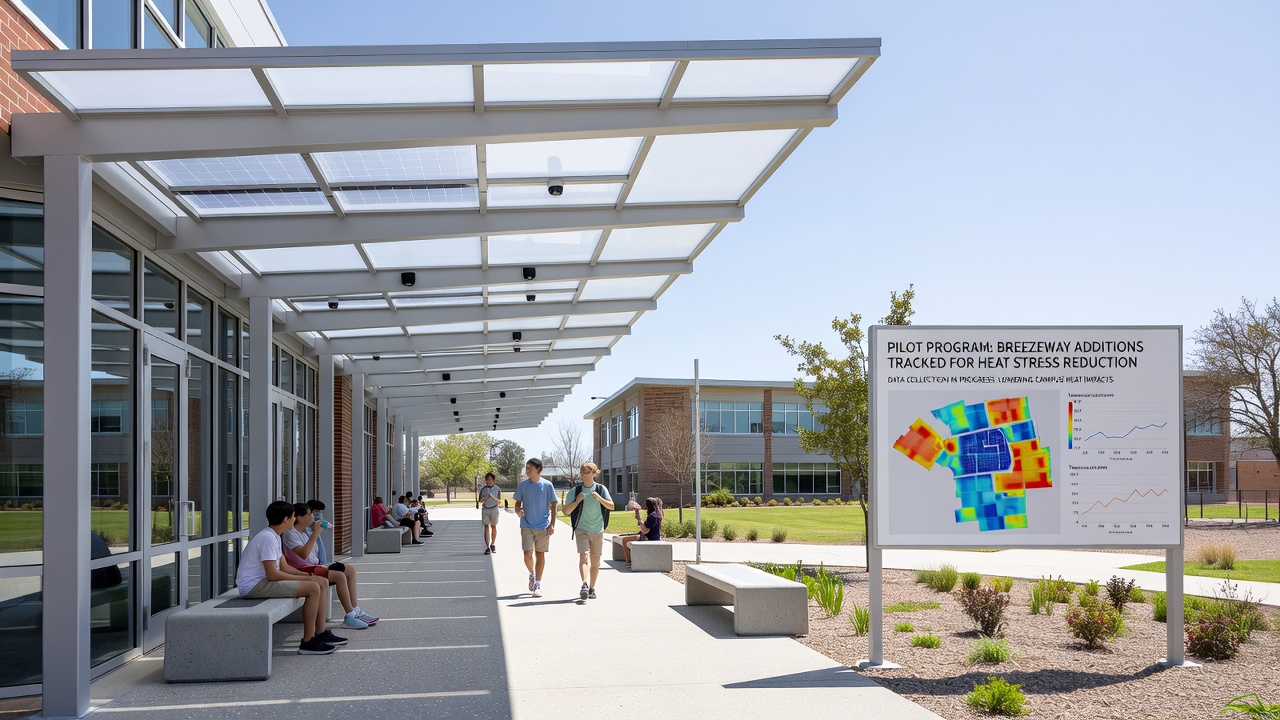
Programs also incorporate health metrics such as reported heat-related incidents logged by school nurses. Data from the first full academic year indicates fewer visits for symptoms like dizziness or fatigue during periods of high outdoor temperatures. Researchers cross-reference these records with local weather station information to account for daily and weekly fluctuations in regional climate conditions.
Geographic Variations and Findings
Districts in drier climates report stronger airflow benefits from the open-sided designs, whereas programs in more humid areas have tested additional roof overhangs to manage occasional rain. A report prepared by the U.S. Environmental Protection Agency highlights how urban heat island effects can intensify on large campuses, and breezeway additions appear to offset some of that impact in the monitored locations. Separate research from Australian universities has examined similar structures in subtropical zones, noting comparable drops in measured heat stress indices.
Maintenance teams track long-term performance by inspecting structural components and cleaning roof surfaces twice annually. Early observations suggest that the materials resist corrosion and retain reflective properties after extended sun exposure. Districts share these operational details through a shared online platform so other regions can adapt the approach to their specific conditions.
Future Monitoring Through 2026
Expanded data collection will continue into November 2026, when teams plan to release a multi-year summary that includes winter performance and energy use patterns in connected buildings. The summary will compare results across different school sizes and layouts, and it will examine whether breezeway placement influences indoor cooling loads in adjacent classrooms. Funding for the extended phase comes from a combination of state education grants and local bond measures approved in 2024.
Conclusion
Pilot programs continue to gather information on how breezeway additions influence heat conditions on school campuses. The structured monitoring through November 2026 will provide additional datasets that districts can use when considering similar infrastructure changes. Ongoing analysis focuses on measurable temperature and health indicators rather than broader projections, and participating regions exchange findings to refine design standards for future installations.